


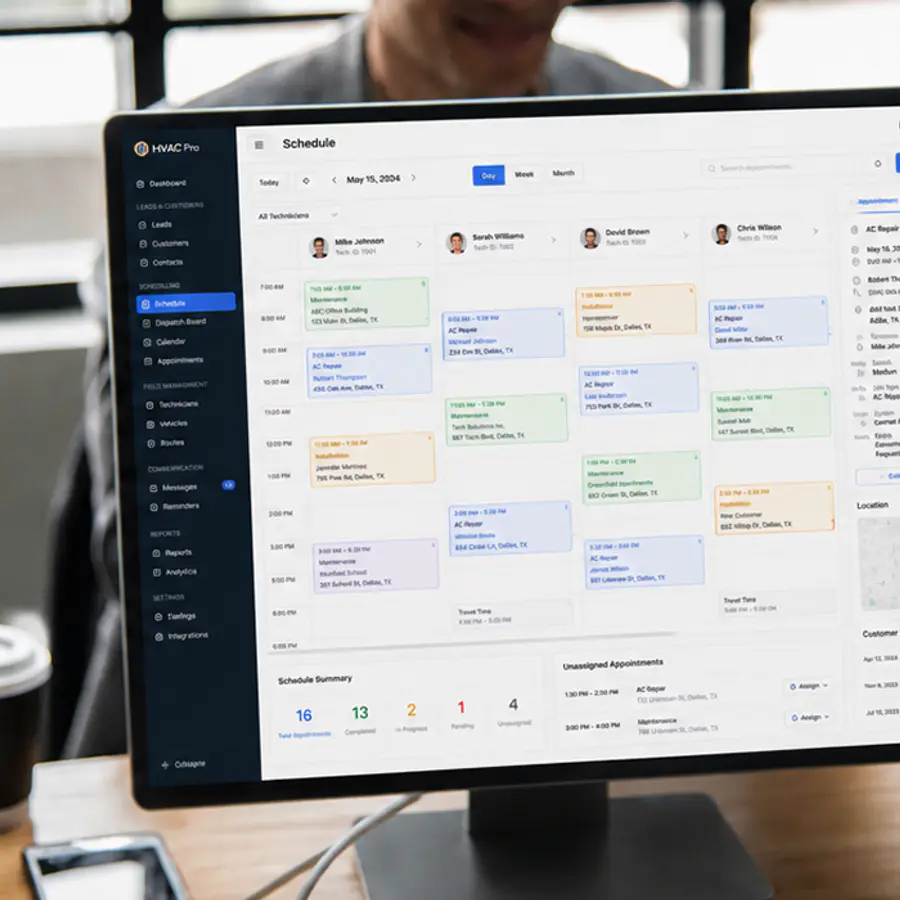
Scheduling that holds up in the first heat wave
HVAC demand is not smooth — it doubles the week the weather turns. Scheduling software that works in April and falls apart in July is not scheduling software. We build dispatch around your real capacity and keep running it.
to reschedule after an emergency call
of field updates entered without a phone call
of jobs assigned by skill and territory
Result from one client project.
Trusted by teams across healthcare, finance, and manufacturing





The schedule lives in three places at once
A typical setup: a shared calendar for installs, a whiteboard for the day’s service calls, and a dispatcher who holds the real picture in their head. It works until volume doubles or the dispatcher takes a week off.
The other constraint is the field. Technicians are in basements and crawl spaces on phones with poor signal. A scheduling tool that assumes a desk and a stable connection gets abandoned within a month, and everyone goes back to phoning the office.
- Peak-season volume that the current process cannot absorb
- Jobs assigned without regard to skill, certification, or territory
- Field updates that only reach the office by phone call
- Emergency calls that force a full manual reshuffle
What dispatch usually needs
Dispatch built on real capacity
Assignment by skill, certification, and territory, with job durations that reflect the work rather than a default slot length.
A field view that works on a phone
Designed for small screens, weak signal, and gloves — job details, status updates, and notes without a round trip to the office.
Connected to jobs and invoicing
Completed work flows into the job record and billing, so nothing is re-entered at the end of the day.
Operated through peak season
We monitor and maintain it. The busiest week of the year is the wrong time to discover a bottleneck alone.
The HVAC systems this is built on
Scheduling and dispatch are core to the custom CRMs we have built for HVAC contractors.


Seasonal load is a running problem, not a launch problem
Peak season finds every weakness
Load problems appear exactly when you can least afford to investigate them. Running the system ourselves means we see them first.
Capacity keeps changing
New technicians, new territories, new service lines. Dispatch rules have to follow, or the team starts overriding them.
Field feedback is the real spec
The flow that needed two fewer taps is only discoverable after technicians use it for a month. That is an argument for staying involved.
Not just clients. Partners and friends!
The work that the Convergine team is doing is nice. I like they take such direct feedback and make quick updates. Jane and the designer are doing a fantastic job.
Steve Arentzoff
FlexPayConvergine is a superhero — 10 million star review. You and the team are simply the best. Always making our wildest visions come to life in a way that works.
Kelsey Harrison
My Main StreetWe are very happy with the services that Convergine has provided us with. The team is responsive, professional, and a genuine pleasure to work with.
Audrey Miron
InnovadermI've managed full-cycle project deployments for years, and this team consistently delivers high-quality solutions on time. Great to work with.
Ian Millar
Health FuturesIt was a great experience to work with you personally and with the whole team. Professional, attentive, and always delivering above expectations.
Diane Lanthier
MRDIDigital tools to start your journey
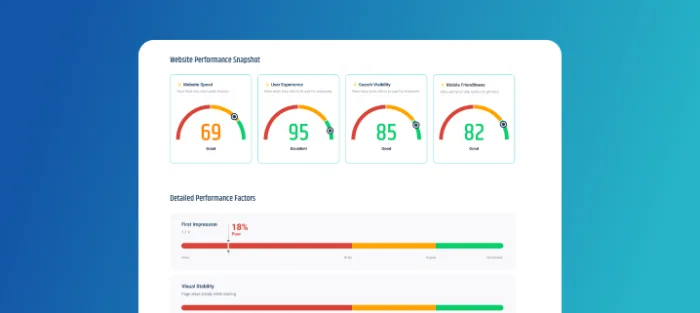
Is your website in good health?
Run a quick diagnostic to uncover issues holding your site back.
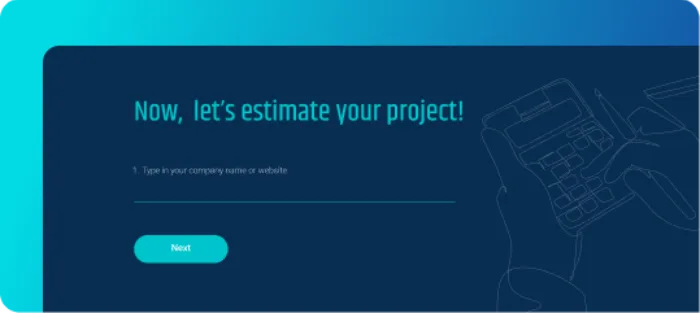
How much might it cost to design a website?
Get an instant ballpark estimate based on your goals and features.
Do you need a custom web app or a SaaS platform?
Answer a few questions and get a clear recommendation.
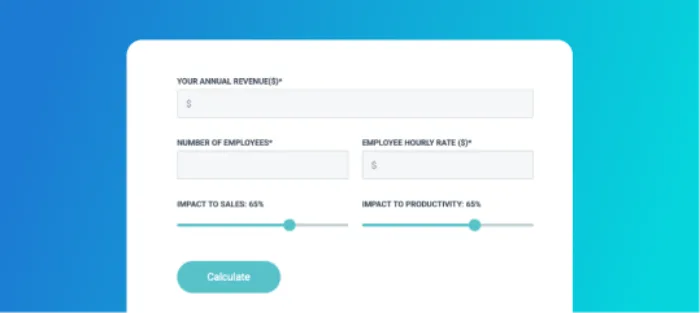
How much could an outage cost your business?
Calculate the real financial impact of downtime in seconds.
Common questions
For many contractors those are the right answer, and we will say so. Custom makes sense when your dispatch rules are genuinely unusual or you already run several systems that do not talk to each other.
Field flows are designed for poor connectivity. How far to take offline support is a scoping decision — full offline sync is real work and we would rather size it honestly.
Yes, and usually you should. Integration is normally the better first move over replacement.
We aim to ship a working dispatch and job-tracking core in the first release, typically three to five months, then extend from there.
Describe a bad Monday
Tell us how the schedule gets built today and what happens when three emergency calls land at once. That is where the requirements are.
Start a conversation