

Integration has changed. The question is no longer just about connecting systems.
A few years ago, integration meant one thing: get System A to talk to System B. Your CRM syncs with your accounting software. Your e-commerce platform updates inventory automatically. That kind of plumbing is still important - but in 2026, it is the floor, not the ceiling.
Here is what has changed: AI has created a new integration layer. Businesses that want to use AI meaningfully - not just as a novelty, but as a real operational tool - need their data connected, structured, and accessible in ways that most organizations have not set up yet.
Think about it. An AI assistant is only as useful as the information it can access. An automated workflow is only as smart as the data flowing through it. A recommendation engine can only recommend based on what it knows. Without solid integration, AI stays stuck at surface-level tasks - answering generic questions, generating boilerplate content, doing things you could already do with a Google search.
With the right integration? AI becomes something genuinely powerful for your business. It can pull real-time data from your CRM to draft proposals. It can monitor your supply chain and flag issues before they become problems. It can automate complex, multi-step workflows that used to require a human at every handoff point.
That is what we build. The connections, data pipelines, and intelligent automation that turn AI from a buzzword into a business advantage.
Why integration looks different in 2026
01
From point-to-point to intelligent
Traditional integrations moved data from one place to another based on rigid rules. If order placed, then update inventory. If payment received, then record in accounting. These still matter, but they are just the starting point now. AI-powered integrations understand context, make decisions, handle exceptions, and learn from patterns - turning simple data movement into intelligent automation.
02
From system-to-system to system-to-AI
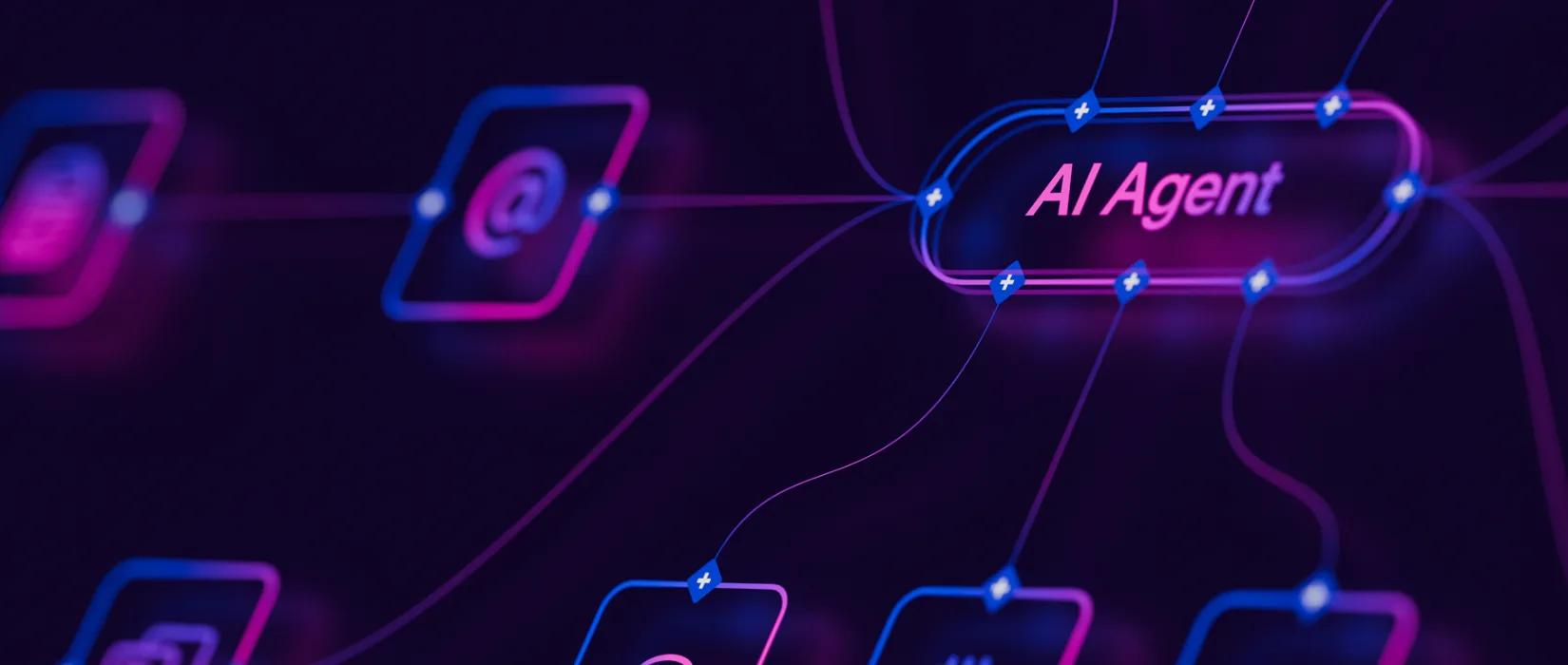
The most important integration challenge today is not just connecting your CRM to your accounting tool. It is making your business data accessible to AI - so AI agents, assistants, and automation can work with real, current information from your actual systems. This is the layer that unlocks AI adoption beyond surface-level experiments.
03
From scheduled syncs to real-time intelligence
Nightly batch syncs used to be fine. In an AI-powered workflow, your systems need to share data in real time - because the AI making decisions needs current information, not yesterday's snapshot.
04
From manual workflows to agentic automation
The next generation of automation is not just rules-based. AI agents can now orchestrate multi-step processes across your business systems - handling approvals, routing decisions, escalations, and follow-ups with an understanding of context that was impossible with traditional automation tools.
Integration services
AI-ready data infrastructure
Before your business can use AI effectively, your data needs to be connected, clean, and accessible. We build the integration architecture that unifies data across your systems - CRM, e-commerce, accounting, operations - creating a foundation that AI tools can actually work with. Without this, every AI project starts with the same bottleneck: where is the data, and how do we get to it?
Intelligent workflow automation
We go beyond simple if-then automations. Using AI-powered orchestration, we build workflows that understand context, handle edge cases, and make smart routing decisions. Invoice processing that reads and categorizes automatically. Lead routing that scores and assigns based on dozens of data points. Support ticket triage that understands intent and urgency. These are not theoretical - they are practical automations we build and deploy.
AI agent integration
AI assistants and agents are only useful if they can access your business data securely and act on it. We integrate AI capabilities directly into your existing systems - connecting large language models with your CRM, knowledge base, inventory, scheduling, and other business tools so your AI actually knows your business, not just the internet.
System-to-system connectivity
The fundamentals still matter. We build robust API integrations connecting your e-commerce platform, payment processors, shipping providers, accounting software, marketing tools, and operational systems. Clean, reliable, well-documented connections that keep your data in sync and your team out of the manual-entry business.
Custom API development
When off-the-shelf connectors do not exist or do not fit, we build custom APIs that connect your systems exactly the way your business needs them connected. Secure, documented, and designed for long-term maintainability.
Data pipeline and ETL
For businesses dealing with large volumes of data across multiple sources, we build data pipelines that extract, transform, and load information where it needs to go - feeding dashboards, AI models, reporting tools, and operational systems with clean, structured data.
E-commerce and retail
E-commerce and retail
Connect your online store with inventory, fulfillment, accounting, and marketing systems. Real-time inventory sync across channels. Automated order routing. AI-powered product recommendations and dynamic pricing based on live data.

CRM and sales
CRM and sales
Unify customer data across touchpoints. Integrate your CRM with marketing, support, billing, and communication tools so your sales team sees the full picture - and AI can help with lead scoring, follow-up automation, and pipeline intelligence.

Accounting and finance
Accounting and finance
Eliminate manual data entry between your business systems and financial software. Automated invoicing, payment reconciliation, expense tracking, and financial reporting that stays current without human intervention.

Marketing and analytics
Marketing and analytics
Connect your marketing stack so campaigns run on unified data. Better attribution, smarter segmentation, AI-powered personalization, and ROI tracking that actually reflects reality across CRM, email, analytics, and advertising platforms.

Payment processing
Payment processing
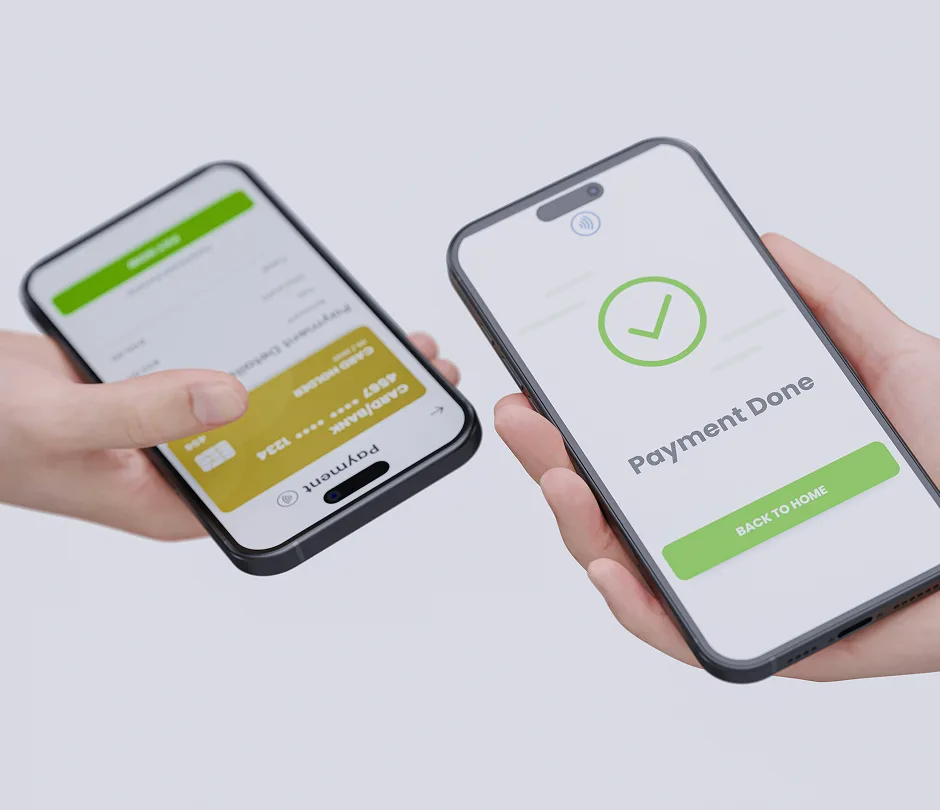
Secure, reliable payment connections across every channel your customers expect. Credit cards, digital wallets, recurring billing, marketplace payouts - centralized management with clear visibility into transaction data.
Shipping and Logistics
Shipping and Logistics
Carrier integration, automated label generation, real-time tracking, rate comparison, and fulfillment orchestration. Connected logistics that scale with your order volume without scaling your manual workload.

Healthcare systems
Healthcare systems
HIPAA-compliant integrations connecting EHR/EMR systems, patient portals, scheduling, billing, and communication tools. Particularly relevant as healthcare adopts AI for patient communication, triage, and administrative automation.

Cloud and infrastructure
Cloud and infrastructure
Link cloud services with your business systems to automate DevOps workflows, sync data across environments, and create connected toolchains that improve team productivity and operational visibility

The AI integration layer - what most businesses are missing
Here is the pattern we see: a business gets excited about AI. They experiment with ChatGPT or a similar tool. It is impressive for general tasks. But when they try to apply it to their actual business - answering customer questions with real product data, automating a process that spans three systems, generating reports from live data - it falls apart. The AI does not have access to the information it needs.
This is the gap we close.
Connecting AI to your business data
We build secure connections between AI tools and your operational systems. Your AI assistant does not just generate generic answers - it pulls from your actual product catalogue, customer history, pricing, availability, and policies. It knows your business because we gave it access to your business.
RAG pipelines for business knowledge
Retrieval-Augmented Generation turns your internal documents, knowledge bases, and data into something AI can search and reference accurately. We build RAG pipelines that connect your proprietary information to AI models - so the answers are grounded in your actual data, not hallucinated from training sets.
AI-powered process automation
Traditional automation breaks when it encounters something unexpected. AI-powered automation adapts. We build intelligent workflows where AI handles the judgment calls - classifying documents, extracting information from unstructured data, making routing decisions based on context, and escalating only when human expertise is genuinely needed.
Monitoring and feedback loops
AI integrations need monitoring just like any other system. We set up observability and feedback mechanisms so you can see how your AI tools are performing, catch issues early, and continuously improve accuracy and reliability.

How we approach integration projects
We start by mapping your current systems, data flows, and pain points. What is connected? What is not? Where is the manual work? Where would AI add the most value? This gives us a clear picture of where to start and what the impact will be.
We design the integration architecture - which systems connect, how data flows, where AI fits in, and what the build sequence looks like. You see the plan before we write any code.
We build in stages, starting with the highest-impact integrations. You see results early and can course-correct as the picture gets clearer. AI-enhanced development helps us move through the build faster without sacrificing quality.
Every integration gets tested thoroughly - data accuracy, error handling, edge cases, performance under load, and security. AI-assisted testing catches issues that manual QA might miss.
We deploy with monitoring in place from day one. Real-time visibility into how your integrations are performing, automated alerting for anomalies, and ongoing optimization.
Integration is not a one-time project. As your business grows and AI capabilities evolve, your integration layer grows with them. Most clients start with core connections and expand over time.
Featured projects
See how our integration services transform businesses by connecting systems, automating workflows, and unifying platforms - driving efficiency and innovation across industries.



Some questions our
clients often ask:
It depends on the number of systems, complexity of data flows, and whether AI capabilities are involved. Simple system-to-system integrations are straightforward and affordable. More complex projects involving AI integration, custom APIs, and data pipeline architecture require a deeper scope conversation. We will give you an honest assessment during a free consultation.
Simple API integrations typically take 2-4 weeks. Multi-system integration projects with AI components usually land in the 6-12 week range. We scope and phase projects so you see value quickly, even on larger initiatives.
Almost never. Integration is about connecting what you already have and making it work better together. We build on top of your current tools - not around them.
Practically anything with an API or data export. We commonly work with CRMs (Salesforce, HubSpot, Zoho), accounting (QuickBooks, Xero), e-commerce (Craft Commerce, Shopify, WooCommerce), marketing (Mailchimp, ActiveCampaign), payment processors, shipping carriers, EHR/EMR systems, and cloud platforms. If your system has an API, we can connect it.
Encrypted data transmission, secure authentication, access controls, and compliance with standards like GDPR, HIPAA, and PCI DSS where applicable. Data security is built into the architecture from the start, not added after the fact.
Traditional integration moves data between systems based on predefined rules. AI integration adds an intelligence layer - connecting AI models to your business data so they can understand context, make decisions, and automate complex processes that rules-based automation cannot handle. Most modern integration projects include elements of both.
Yes - that is often where we start. Our discovery process identifies not just integration gaps but AI opportunities. We will tell you honestly where AI adds real value and where simpler automation is the better investment.
Every integration we build includes error handling, retry logic, and monitoring. If something does fail, our monitoring catches it immediately. For clients on managed services, we respond and resolve proactively. For others, we provide documentation and support options.
Digital tools to start your journey
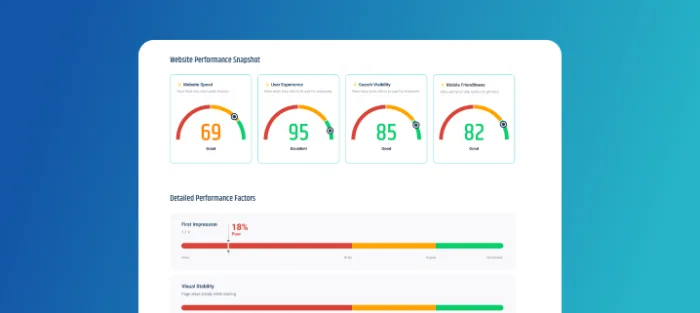
Is your website in
good health?
Run a quick diagnostic to uncover issues holding your site back.
How much might it cost to design a website?
Get an instant ballpark estimates based on your goals and features.
Do you need a custom web app or a SaaS platform?
Answer a few questions and get a clear recommendation for your solution.
How much could an outage cost your business?
Calculate the real financial impact of downtime in just seconds.