

Compare Craft Commerce vs WooCommerce across customizability, performance, integrations, and more. Find the best e-commerce fit for your business goals.
Selecting the right e-commerce platform is a critical step in building a store that performs well and supports growth tomorrow. It affects everything—from user experience and backend workflows to integration with your business systems.
In this post, we compare Craft Commerce vs WooCommerce. One offers complete control and customization for complex, scalable solutions. The other provides a plugin-based approach that’s familiar and widely adopted.
If you’re evaluating platforms and need a clear breakdown of how they stack up, you’re in the right place.
Key Takeaways
- Craft Commerce is ideal for businesses that need custom-built, high-performance e-commerce solutions with deep integration capabilities.
- WooCommerce is a solid option for small to mid-sized stores looking for a faster launch and a plugin-based setup.
- Craft Commerce offers more control, flexibility, and scalability—but requires developer involvement.
- WooCommerce benefits from a large ecosystem but can become complex and harder to manage at scale.
- The right choice depends on your business goals, technical needs, and long-term growth plans.
Craft Commerce vs WooCommerce on Customizability
Craft Commerce is built for customization from the ground up. It gives developers full control over how every piece of the store functions and looks—from product structures and checkout flows to backend logic and integrations. There are no rigid templates or pre-defined limitations, making it a top choice for businesses with unique requirements or non-standard workflows.
WooCommerce, on the other hand, relies heavily on themes and plugins. While it offers flexibility, that flexibility is often constrained by third-party tools. Extending functionality is possible but can lead to code conflicts, plugin bloat, and unexpected behavior—especially as the store grows more complex.
If your business demands tailored functionality, custom UX/UI, or integration with internal systems, Craft Commerce offers a cleaner, more scalable path. WooCommerce may suffice for simpler e-commerce needs or teams seeking a faster setup using existing tools.
Craft Commerce vs WooCommerce on Performance & Scalability
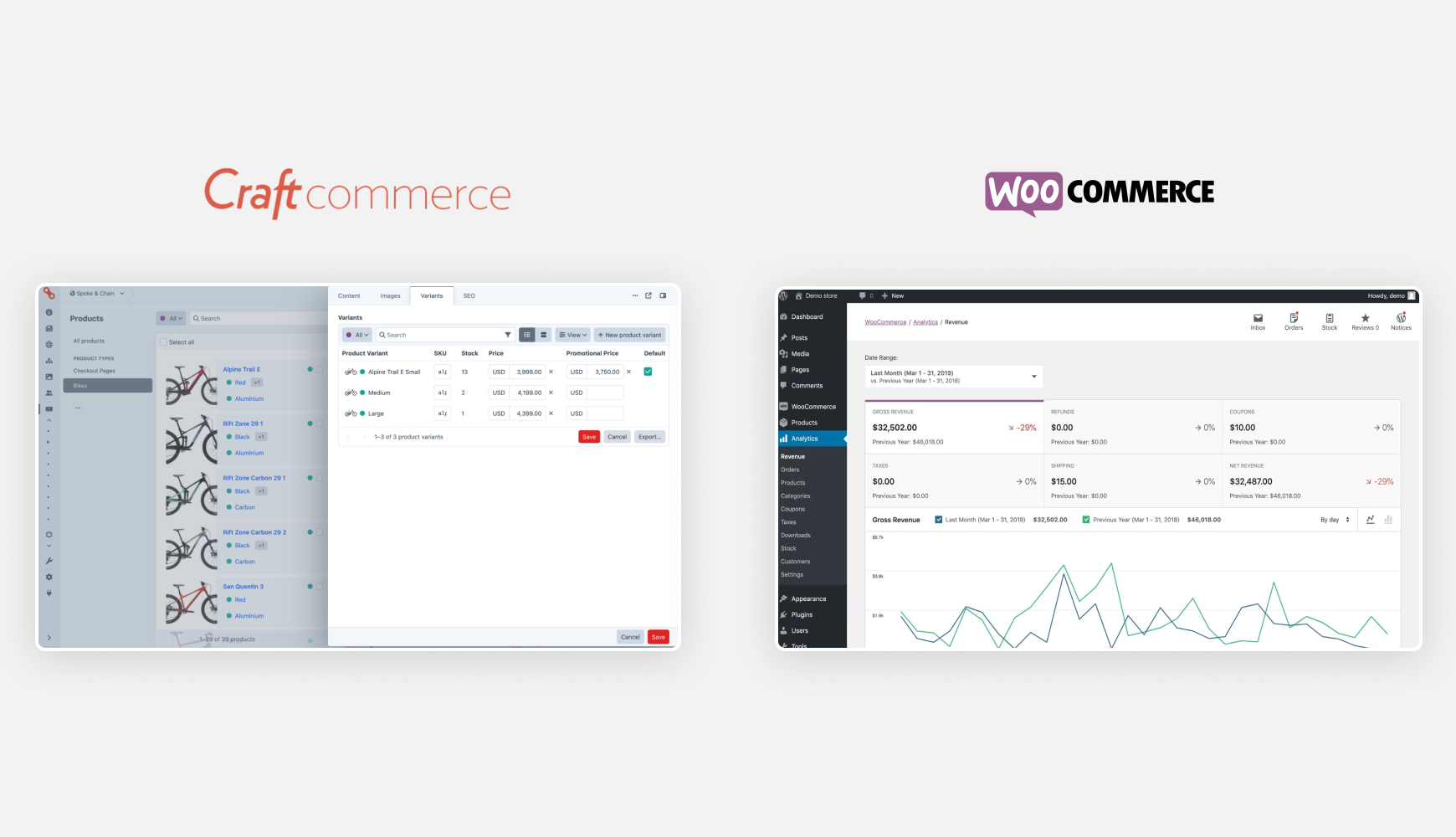
Craft Commerce is optimized for performance from the start. Its lean, modular architecture avoids unnecessary overhead, making it a strong performer even under heavy traffic. Because it doesn’t rely on a bloated plugin ecosystem, developers can fine-tune performance at every layer—from caching to query optimization. As your store grows, Craft Commerce scales cleanly, whether you're adding thousands of products or integrating complex third-party systems.
WooCommerce, built on top of WordPress, performs well for smaller stores but often struggles as complexity increases. Each added plugin introduces potential slowdowns and dependencies. Scaling WooCommerce usually requires server upgrades, performance plugins, and heavy maintenance—especially for stores with large catalogs or advanced functionality.
For businesses planning long-term growth, Craft Commerce provides the performance headroom and architecture to support that evolution without constant workarounds.
Craft Commerce vs WooCommerce on Security
Craft Commerce gives developers complete control over the application stack, reducing reliance on third-party plugins—which are often the biggest source of vulnerabilities in e-commerce platforms. With fewer external dependencies, better code quality control, and the ability to implement tailored security measures, Craft Commerce is a strong choice for industries where compliance and data protection are non-negotiable.
WooCommerce, by contrast, inherits the broader security landscape of WordPress. While it's actively maintained and secure at its core, the open plugin ecosystem introduces more risk. Many WooCommerce stores rely on multiple third-party extensions, each with its own update cycle and potential vulnerabilities. Mitigating this requires constant vigilance, regular updates, and additional security layers.
For businesses in sectors like healthcare, finance, or manufacturing—where protecting sensitive data is critical—Craft Commerce offers a more secure foundation with fewer moving parts to monitor.
Need Help Choosing the Right Platform?
Choosing between Craft Commerce and WooCommerce isn’t always straightforward—especially when long-term scalability, integrations, and performance are on the line.
If you're weighing options and want a second opinion grounded in real-world experience, our team is here to help.
Craft Commerce vs WooCommerce on Ease of Use
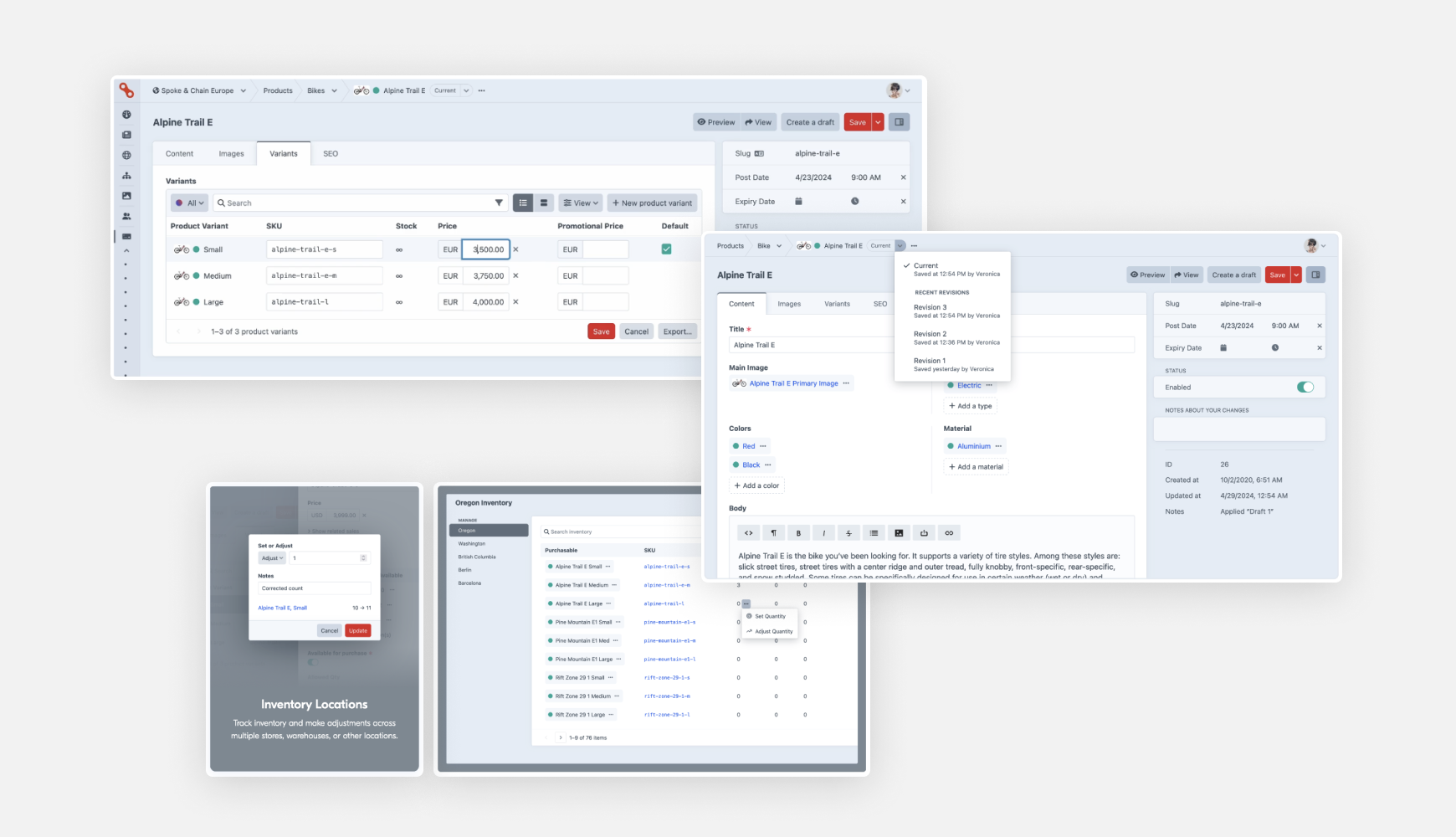
WooCommerce is often praised for its user-friendly setup. It’s a plugin for WordPress, so users familiar with the WordPress dashboard can quickly get up and running. Store owners can manage products, orders, and settings with minimal technical knowledge, making it a solid choice for small teams or non-technical users.
Craft Commerce, on the other hand, is built for customization and scalability—which means it’s geared more toward developers and agencies. The admin interface is clean, modern, and highly flexible, but setup and configuration typically require development expertise. Once configured, however, content editors and store managers benefit from a well-structured, intuitive backend tailored to their workflow.
If ease of setup is the top priority, WooCommerce delivers. If you want a tailored admin experience with clean workflows that scale with your business, Craft Commerce is a stronger long-term choice—especially with a development partner like Convergine.
Craft Commerce vs WooCommerce on Integration Capabilities
Craft Commerce excels when it comes to integration flexibility. It’s designed for custom development, making it easy to connect with CRMs, ERPs, marketing automation platforms, shipping providers, and third-party APIs. Whether your business uses HubSpot, Salesforce, Zoho, or a custom fulfillment system, Craft Commerce can be tailored to sync seamlessly. It’s especially well-suited for businesses with complex back-office operations or industry-specific tools.
WooCommerce offers a large marketplace of plugins and pre-built integrations. Many common services like Mailchimp, Stripe, and PayPal are just a few clicks away. However, when integrations get more complex—like syncing inventory with ERP systems or managing multi-channel data flows—WooCommerce can become clunky or require multiple plugins to stitch things together. This can lead to performance issues and higher maintenance.
If your business depends on smooth integration between commerce and operations, Craft Commerce provides a cleaner, more scalable solution.
See Craft Commerce in Action
Wondering how Craft Commerce performs in real-world scenarios? We’ve built powerful e-commerce solutions tailored to unique business needs—from complex integrations to custom product workflows.
Take a look at how we’ve helped our clients build stores that do more than just sell.
Craft Commerce vs WooCommerce on Developer Dependency
Craft Commerce is built with developers in mind. It offers a clean, flexible codebase and a modular architecture that supports fully custom solutions—but this power comes with a dependency. To get the most out of Craft Commerce, you’ll need a skilled development team. Everything from setup to feature implementation and integrations is custom-built, which makes it ideal for businesses that want a tailored platform managed by professionals.
WooCommerce is more accessible for non-technical users. Many store owners can install themes, configure basic settings, and extend functionality using plugins without writing code. While advanced customization still benefits from developer support, WooCommerce allows for more DIY management—particularly for smaller stores with less complex needs.
In short, Craft Commerce is for businesses that view their website as a long-term, strategic asset worth investing in, while WooCommerce suits teams looking for more hands-on control without deep technical involvement.
Craft Commerce vs WooCommerce on Cost of Ownership
Craft Commerce typically involves a higher upfront investment. You’re paying for professional development, licensing, and a fully custom build. However, this model avoids the long-term pitfalls of plugin sprawl, hidden compatibility issues, and patchwork fixes. Maintenance is cleaner, performance is more predictable, and there’s less risk of surprise rebuilds later.
WooCommerce is often seen as the budget-friendly choice. It’s free to start, and many plugins are inexpensive or freemium. But as the store grows, so do the costs—premium plugins, performance tuning, and security measures add up. Managing updates and conflicts can eat into time and budgets, especially without dedicated technical support.
When evaluating total cost of ownership, Craft Commerce favors long-term value and stability, while WooCommerce focuses on reducing initial barriers to entry—often with trade-offs in scale and maintainability.
Craft Commerce vs WooCommerce on Ideal Use Cases
Craft Commerce is best suited for businesses that need a highly tailored, scalable, and secure e-commerce platform. It’s ideal for industries with complex workflows, custom product types, or deep integration needs—such as healthcare, manufacturing, B2B services, and high-growth retail. If your store is central to your operations and you view it as a long-term asset, Craft Commerce offers the flexibility and performance to grow with you.
WooCommerce is a good fit for small to mid-sized businesses that need to launch quickly with standard e-commerce functionality. It works well for simple product catalogs, straightforward checkout experiences, and teams that prefer off-the-shelf tools. If your focus is speed, budget, and internal management without heavy technical requirements, WooCommerce delivers a solid starting point.
Ultimately, the right choice depends on your business model, digital strategy, and appetite for customization.
Final Thoughts
Both Craft Commerce and WooCommerce offer viable paths to launching and growing an online store—but they serve very different priorities.
Craft Commerce is the platform of choice for businesses that value precision, performance, and complete control. It’s ideal for custom builds, complex workflows, and integrations that require a solid technical foundation. If you're planning for scale and looking to build something that aligns perfectly with your operations, Craft is built for that level of ambition.
WooCommerce offers a practical and accessible entry point for businesses that want to get started quickly with familiar tools. It shines for smaller e-commerce setups where plugin-based functionality and lower upfront costs are key considerations.
The better platform isn’t the one with the most features out of the box—it’s the one that fits your business model, supports your goals, and grows with you over time.
Let’s Build the Right E-Commerce Solution Together
Whether you're leaning toward the flexibility of Craft Commerce or the familiarity of WooCommerce, the best decision is one that aligns with your long-term business goals.
At Convergine, we help businesses make smart, future-ready choices—and then bring them to life with precision and care.
Let’s talk about what you’re building and how we can help make it exceptional.