

Compare Craft CMS vs Contentful across content modeling, developer experience, usability, and cost. Find out which CMS fits your team and project goals.
In this post, we’re comparing Craft CMS vs Contentful—two modern content management systems built for flexibility, but with very different approaches. One gives you full control over structure, design, and deployment. The other is API-first, cloud-native, and built for multi-channel content delivery.
If you're planning a new digital project or rethinking your current CMS setup, this breakdown will help you decide which platform fits your workflow, team, and long-term goals.
Key Takeaways |
|---|
|
How Craft CMS Compares to Contentful
While both platforms are built for flexibility, their strengths lie in different areas. Below, we break down how Craft CMS vs Contentful stack up across the key factors that matter when choosing the right CMS for your project.
| Aspect | Craft CMS | Contentful |
| Content Modeling | Flexible, field-first, page-friendly | Structured, reusable, API-first |
| Developer Experience | Full control, traditional templating (Twig) | API-driven, requires frontend framework setup |
| Editor Usability | Intuitive, live preview, native content flow | Clean UI, but abstract and less visual |
| Headless Support | Optional—can be headless or traditional | Fully headless by default |
| Cost & Licensing | One-time license + hosting | SaaS pricing, scales with usage and features |
Craft CMS vs Contentful on Content Modeling
How a CMS structures content is one of the biggest factors in how flexible your project will be. Some platforms let you shape content around your design and user flow. Others prioritize structured content for reuse across multiple channels. The right fit depends on what your content needs to do—and how it’s managed day to day.
- Craft CMS gives teams full control over how content is structured. You can create custom fields, group them into flexible entry types, and design relationships between content elements in a way that mirrors how your site or app actually works. It's especially useful for projects that need rich, varied page layouts and editorial freedom.
- Contentful takes a more rigid, structured approach. It’s built around reusable content types and fields that are optimized for delivery across multiple platforms—great for consistency, but less intuitive when creating design-heavy or page-specific content. Editors often end up needing help to visualize how the content fits into the final layout.
Craft CMS vs Contentful on Developer Experience
The developer experience shapes how fast your team can build, iterate, and maintain your site or app. A CMS that matches your team’s preferred tools and workflow leads to faster launches and fewer roadblocks. Some platforms are hands-on and flexible; others lean on APIs and frontend frameworks.
- Craft CMS offers full control over the front end using Twig templating, allowing developers to build exactly what’s needed without layers of abstraction. It supports traditional and headless architectures, and fits naturally into teams used to working with PHP-based stacks. Local development is straightforward, with clear control over environments and deployments.
- Contentful is fully headless and API-first. Developers work with content via REST or GraphQL, then build the front end in a separate framework—usually something like React, Vue, or Next.js. This decoupling is powerful for multi-channel delivery but comes with more setup, more dependencies, and a steeper ramp-up for teams unfamiliar with the architecture.
Craft CMS vs Contentful on Editor Usability
A CMS isn’t just for developers—content teams need to work in it every day. The editor experience affects how quickly teams can publish, update, and manage content without bottlenecks or constant technical support.
- Craft CMS is known for its clean, intuitive interface. Editors can manage content in a structured but visual way, with live preview support that shows exactly how changes will look before going live. Entry types, custom fields, and Matrix blocks allow for rich layouts without breaking the editorial flow.
- Contentful has a modern interface, but it's more abstract. Since it’s structured around reusable content types and references, editors often work with fragmented pieces of content without clear visual context. This works well for structured content distribution, but can slow teams down when building full pages or making layout-specific updates.
Craft CMS vs Contentful on Headless Support
Headless architecture separates the content layer from the front end, allowing teams to publish across websites, apps, and other platforms from a single source. Both Craft CMS and Contentful support this model—but in different ways.
- Contentful is built as a headless CMS from the ground up. All content is delivered via API (REST or GraphQL), and there’s no built-in front end. This makes it ideal for teams building custom front ends using JavaScript frameworks, or those managing content across multiple channels.
- Craft CMS takes a more flexible approach. It can be used as a traditional CMS with full front-end control via Twig, or as a headless CMS using its GraphQL or REST API. This hybrid model gives teams the freedom to start with a conventional setup and evolve toward headless when needed—without committing to it from day one.
Craft CMS vs Contentful on Cost & Licensing
Cost structure plays a major role in long-term planning—especially when it comes to scaling or customizing a CMS. The licensing model, hosting approach, and feature tiers all contribute to the true cost of ownership.
- Craft CMS uses a straightforward licensing model. You pay a one-time fee for a commercial license, plus optional annual renewals for updates and support. Since it's self-hosted, you have full control over your infrastructure and can scale it based on your actual needs—without being tied to usage-based pricing.
- Contentful is a SaaS platform with tiered pricing based on users, API calls, environments, and features. While the free tier is generous for small projects, costs can rise quickly as traffic, content volume, or team size grows. You’re paying for managed infrastructure and enterprise-level support, but also giving up some control over where and how your content is hosted.
So, Which One Makes More Sense?
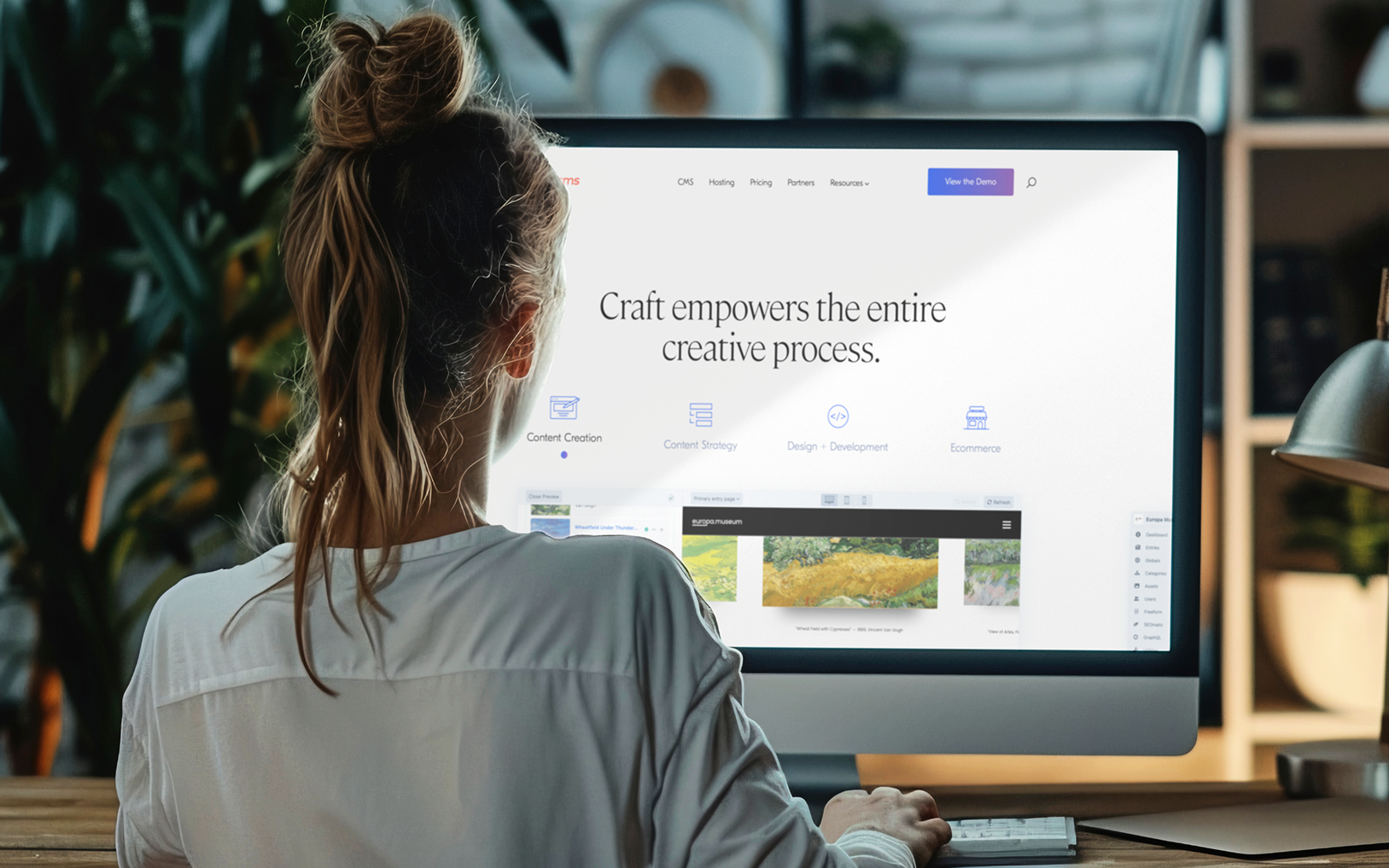
For teams that need full control over how content is structured, presented, and managed—Craft CMS is often the better fit. It supports custom design, editorial flexibility, and clean development workflows without forcing you into a headless setup unless you want it.
Contentful shines in scenarios where structured content needs to be delivered across multiple platforms from day one. But for many web projects, especially those led by design, content, or marketing teams, it introduces unnecessary complexity.
If your priorities include editorial control, visual consistency, and a long-term platform you can grow with, Craft CMS gives you more freedom—with less friction.
Let’s Build It Right |
|---|
| Whether you're launching a new site or replatforming from a system that’s holding you back, we can help you design and build with Craft CMS. Our team brings deep expertise in content architecture, custom development, and performance-driven design—backed by real-world experience across industries. |
| Talk to Us |
Frequently Asked Questions
1. Is Craft CMS headless?
Yes—Craft CMS can be used as a headless CMS via REST or GraphQL APIs. But it also supports traditional templating, giving you the flexibility to choose the architecture that fits your project.
2. Can I switch from Contentful to Craft CMS?
Yes. We’ve helped clients migrate from Contentful to Craft CMS, including structured content, media assets, and relationships. The process depends on your current setup, but it’s absolutely doable with planning.
3. Does Contentful offer more features out of the box?
Contentful includes built-in APIs and structured delivery tools by default. Craft CMS offers similar capabilities through plugins or custom development, but adds more flexibility around how content is structured and displayed.
4. Which is better for non-technical users?
Craft CMS typically offers a more intuitive editing experience, especially for teams managing content-rich pages. Contentful’s UI is clean but can feel more abstract due to its structured, modular approach.