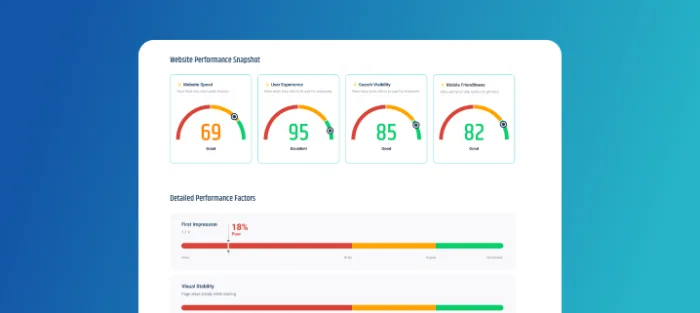



The most essential elements of a successful website—clear strategy, intuitive design, reliable performance, strong SEO, and continuous improvement—are not optional. They are the framework that determines whether your website drives growth or holds your business back.
A website is either one of your strongest business assets or a constant obstacle — rarely anything in between. Over the past decade, working with clients across healthcare, finance, e-commerce, and more, we’ve seen both sides. The difference comes down to structure. Websites built on the right foundation attract visitors, build trust, and scale with growth, while those without a clear framework often fail to deliver consistent results.
To address this challenge, we’ve outlined the most essential elements of a successful website. These five pillars—purpose and strategy, user experience and design, performance and security, content and SEO, and analytics and maintenance—form a reliable framework for building websites that engage, perform, and support long-term business success.
Key Takeaways
- The most essential elements of a successful website can be grouped into five pillars: strategy, design, performance, content, and analytics.
- Clear goals and audience research give your website direction and purpose.
- User-friendly design and accessibility keep visitors engaged and build trust.
- Strong performance, security, and SEO make your site visible, fast, and reliable.
- Ongoing analytics and maintenance ensure your website continues to grow with your business.
The 5 Non-negotiable, and Most Essential Elements of a Successful Website
1. Purpose & Strategy
Every successful website starts with clarity. Without a clear purpose, even the best design or technology won’t deliver results. Our team helps businesses define the strategy that gives their websites direction and measurable impact. This is one of the most essential elements of a successful website because it creates the foundation for everything else.
Define Goals
Whether the focus is generating leads, increasing sales, sharing information, or building community, the first step is to set specific, measurable goals. For example: “Increase newsletter sign-ups by 20% in six months.”
Target Audience
A website should speak directly to the people it serves. Researching customer demographics, motivations, and pain points helps shape content, design, and features that resonate with your audience.
Competitive Analysis
Reviewing competitors highlights what works well in your industry—and where there’s room to stand out. This analysis helps define your unique value and ensures your website doesn’t just meet industry standards but moves beyond them.
2. User Experience (UX) & Design

A website must be easy to use and visually clear, or visitors will leave before taking action. Strong design and user experience are among the most essential elements of a successful website because they directly influence how people perceive your business.
Intuitive Navigation
Clear menus and logical page structures help visitors find what they need quickly—ideally within three clicks.
Responsive & Mobile-First
More than half of web traffic comes from mobile devices. A mobile-first design ensures your site looks and works well across all screen sizes.
Visual Hierarchy & Readability
Consistent fonts, spacing, and color contrast guide visitors’ attention and make content easier to read.
Accessibility
Meeting accessibility standards (WCAG 2.1) ensures everyone can use your site. This includes features like alt text for images, proper color contrast, and keyboard navigation.
3. Performance & Security
A website that loads quickly and stays secure builds confidence with every visitor. Performance and protection are among the most essential elements of a successful website because they directly affect user trust and business reliability.
Page Speed Optimization
A slow website drives people away. By reducing file sizes, cleaning up code, and using modern formats, your site can load in seconds instead of making visitors wait.
Hosting & Uptime
If your site is down, customers can’t reach you. Choosing hosting with a 99.9% uptime guarantee means your website is available almost all the time, reducing missed opportunities and lost revenue.
Secure Protocols
Think of this as the lock on your website’s front door. An SSL certificate (the “HTTPS” in a web address) protects customer data and shows visitors that your site is safe to use.
Regular Backups & Updates
Websites need routine care. Automated backups save copies of your site, and regular updates close security gaps. Together, they protect your site from crashes, mistakes, and attacks.
Web Application Firewall (WAF)
A firewall acts like security at the entrance of your site. It blocks suspicious traffic and stops common online attacks before they can cause damage. A WAF provides an extra layer of safety for both you and your customers.
4. Content & Search Engine Optimization (SEO)
Great content brings people to your site, and SEO makes sure they can find it. Together, they are among the most essential elements of a successful website because they drive visibility, engagement, and growth.
Content Strategy
Create content that answers customer questions, solves problems, or guides decisions—whether that’s blog posts, videos, or detailed guides.
Keyword Research & On-Page SEO
Use the words your audience actually searches for in titles, headings, and descriptions. This helps your website show up when people look for services like yours.
Technical SEO Foundations
Tools like sitemaps and clean URLs help search engines crawl and understand your site more effectively.
Content Freshness & Authority
Update existing pages regularly and earn backlinks from trusted sources. This signals to search engines that your site is active and credible.
5. Analytics, Maintenance & Growth
Websites don’t succeed on launch day alone—they need ongoing care and insights to keep improving. Analytics, regular maintenance, and scalability are some of the most essential elements of a successful website because they ensure long-term performance.
Analytics Setup
Tracking tools like Google Analytics show where visitors come from, what they do on your site, and where they drop off. This data helps you make smarter business decisions.
Key Performance Indicators (KPIs)
Metrics such as bounce rate, average session time, and conversion rate reveal how well your site is performing.
A/B Testing & Optimization
Experimenting with headlines, layouts, or calls-to-action helps you learn what engages visitors most.
Regular Audits
Routine checks catch broken links, outdated content, or technical issues before they become bigger problems.
Scalability
A well-built website should grow with your business, supporting new features or higher traffic without major rework.
Final Thoughts
The most essential elements of a successful website—clear strategy, intuitive design, reliable performance, strong SEO, and continuous improvement—are not optional. They are the framework that determines whether your website drives growth or holds your business back.
Our team builds websites on these foundations every day, helping businesses across industries turn their digital presence into a true business asset. By addressing each of these elements, your website can do more than attract visitors—it can earn trust, convert customers, and scale with your long-term goals.