


Explore web design trends in 2026 built for performance, growth, and real business outcomes — not just visual upgrades.
Web design trends in 2026 aren’t subtle upgrades—they’re seismic shifts in how businesses engage, convert, and retain users online. Forget aesthetics for a moment. What’s emerging now are technologies and strategies that shape behavior, simplify decision-making, and put control in the hands of the user—often without them even realizing it.
From intelligent layouts that adapt in real time to ultra-efficient, low-carbon builds that align with corporate ESG goals, these trends do more than just look good. They perform, scale, and solve real business problems.
Let's look at the trends shaping that evolution—practical, forward-thinking changes that help your website work harder for your business.
| Stay Ahead of 2026 — Without the Overhead |
|---|
| Your website shouldn’t slow your team down or sit idle on the sidelines. If it’s meant to support growth, streamline tasks, or help close business — we’ll build it to do exactly that. You focus on running your company. We’ll make the tech invisible and the results measurable. |
| Book a Strategy Call |
Key Takeaways: What’s Actually Changing in 2026
- Websites are becoming operational tools — not just marketing assets, but functional platforms that support workflows, decisions, and internal processes.
- Personalization is moving beyond names — layouts, content blocks, and flows will adapt dynamically based on user behaviour, role, or context.
- Design is being measured by output — visuals still matter, but speed, clarity, and conversion now lead the conversation.
- Sustainability and accessibility are no longer optional — efficient code, low-carbon builds, and neuro-inclusive UX are becoming standard.
- Multi-device architecture is expected — headless, API-driven, and adaptive content systems will power consistent experiences across web, mobile, and everything in between.
6 Web Design Trends in 2026 That Actually Matter
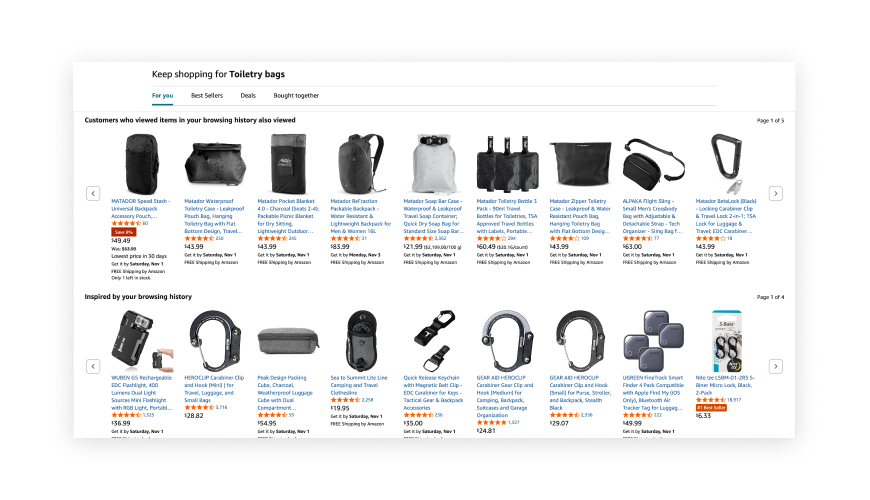
These trends reflect where websites are headed—smarter, faster, more efficient, and aligned with how businesses actually operate. If you’re planning a redesign or a new build, this is the shortlist to work from.
1. AI-Driven Layouts and Behavioural Adaptation
AI-powered layout and content adaptation is one of the most practical web design trends in 2026. These systems automatically adjust what users see based on behaviour, location, device type, or referral source. Every visit is tailored, removing the need for static design and manual segmentation.
Why business-relevant
Users reach the right content faster, stay engaged longer, and move through the site with less friction. This leads to higher conversions and fewer drop-offs. For sectors like healthcare, finance, and e-commerce, it’s a straightforward way to improve outcomes without adding work for internal teams.
2. Neuro-Inclusive and Cognitive-Friendly UX
One of the most important web design trends in 2026 is designing for clarity and cognitive ease. Interfaces are being built to reduce distractions, simplify choices, and give users control over layout, contrast, motion, and reading comfort — all without compromising performance.
Why business-relevant
Cleaner, more focused interfaces help users complete tasks faster and with fewer errors. That means better engagement, lower support volume, and higher satisfaction. For industries handling complex data, compliance-heavy forms, or dense content, this directly improves outcomes.
3. Low-Carbon, Performance-First Builds
Another key shift in web design trends in 2026 is the focus on efficient, low-carbon websites. This means leaner code, optimized media, reduced server load, and dark mode support. The goal: faster performance, lower energy consumption, and a cleaner footprint — without sacrificing functionality.
Why business-relevant
Faster websites convert better. They rank higher, bounce less, and work consistently across devices and networks. For businesses with sustainability targets or ESG reporting, low-carbon builds align with company values while improving speed and user experience at the same time.
4. Zero-UI and Invisible Interfaces
Among the more advanced web design trends in 2026 is the rise of interfaces that don’t rely on traditional visuals. Voice input, gesture control, predictive suggestions, and background automation are being integrated into websites to reduce friction and simplify user action.
Why business-relevant
Users don’t always want to click through menus or fill out long forms. Giving them faster ways to get what they need — by speaking, tapping, or letting the system handle defaults — means fewer drop-offs and smoother interactions. This is especially useful in high-pressure sectors like healthcare or service industries where speed matters.
5. Adaptive Content and Multi-Channel Architecture
A major part of web design trends in 2026 is structuring content to work across multiple channels — web, mobile, app, internal tools, even kiosks. This is powered by headless or hybrid CMS setups that separate content from layout, allowing it to be reused anywhere without duplication.
Why business-relevant
Content only needs to be written once, then delivered everywhere. This cuts down effort, reduces errors, and keeps messaging consistent across all platforms. For growing companies with marketing, sales, and support teams all relying on the same content, this structure saves time and reduces complexity.
6. Micro-Interactions and Functional Motion
The final standout in web design trends in 2026 is the use of precise, functional motion — small animations that guide users, confirm actions, or highlight change. These micro-interactions are purpose-built: buttons that respond, fields that validate instantly, menus that clarify structure.
Why business-relevant
Well-placed motion reduces hesitation and improves flow. Users don’t guess — they get feedback. This cuts down on support issues, improves form completion, and makes the experience feel sharper. For businesses focused on conversion or usability, it’s a subtle but powerful way to gain ground.
How You Can Implement This — The Smart Way
You’ve got two options:
1. Try to piece it together yourself. Spend time learning new systems, testing tools, and managing outsourced freelancers who might look qualified but turn into a liability when it matters most.
2. Partner with a team that’s spent over a decade delivering high-performance websites across industries like healthcare, finance, and manufacturing. A team that knows how to implement these trends — cleanly, securely, and without disrupting your operations.
At Convergine, we bring the full package: strategy, design, development, optimization, testing, and support — all under one roof. You get results without guesswork, and a digital platform that works like a business tool, not a burden.
| Let’s Build Something That Performs |
|---|
| If your website needs to work harder, faster, and smarter, let’s build it right — with the team that already knows how. |
| Start the Conversation |